



SDS Binders, Uncategorized
What is an SDS Binder
What is an SDS Binder, and Does Your Workplace Legally Need One?
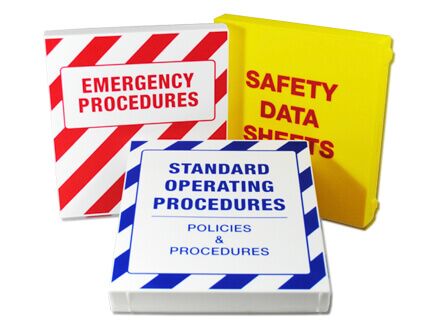 Learn about SDS binder requirements under OSHA’s Hazard Communication Standard. Discover if your workplace legally needs a Safety Data Sheet binder and how to maintain compliance.
What is an SDS Binder and Why Does It Matter?
In any environment where chemicals are present—from industrial manufacturing plants to the cleaning closet of a local restaurant—safety is a legal mandate, not a suggestion. At the heart of this safety protocol is the SDS binder (Safety Data Sheet binder).
An SDS binder is a physical filing system used to store documents that detail the properties of each chemical, the physical and health hazards, protective measures, and safety precautions for handling, storing, and transporting the material. Formerly known as an MSDS (Material Safety Data Sheet) binder, the transition to the GHS Safety Data Sheet requirements under HazCom 2012 standardized these documents into a consistent SDS 16-section format.
Does Your Workplace Legally Need an SDS Binder?
The short answer is: If your employees are exposed to hazardous chemicals, yes, you are legally required to provide access to Safety Data Sheets. According to OSHA 29 CFR 1910.1200, also known as the OSHA Hazard Communication Standard (HCS), employers must ensure that labels and safety data sheets are “readily accessible” to employees for all hazardous chemicals in their workplace. While the law doesn’t strictly mandate a “three-ring binder,” it does mandate immediate access. For many, a chemical safety binder workplace setup remains the most reliable way to meet this burden.
OSHA SDS Binder Requirements
To stay compliant during an OSHA binder inspection, your system must meet several criteria:
- Accessibility: SDSs must be readily accessible during all shifts.
- Completeness: You must have an SDS for every hazardous chemical on your workplace chemical inventory list.
- Language: Documentation must be in English (though additional languages are encouraged).
SDS Binder vs. Digital SDS System: Which is Better?
A common question for modern managers is: Do I need an SDS binder if I have a computer? OSHA does allow for a digital SDS management system, but there are strict caveats.
Paper SDS Binder (The Traditional Route)
- Pros: Works during power outages; requires no technical training; impossible to have “server downtime.”
- Cons: Harder to update; can become bulky; prone to physical damage or
misplacement.
Electronic SDS Compliance
If you choose a digital SDS management system, OSHA requires that:
- Employees know how to operate the software.
- There is an immediate backup (like a printed binder) in case of a power failure or emergency.
- There are no barriers to access (e.g., no “asking a supervisor for a password”).
How to Organize an SDS Binder for Compliance
 Simply throwing papers into a folder isn’t enough for workplace SDS compliance. A professional SDS filing system should be organized for speed during an emergency.
Use an SDS Binder Template
A well-structured binder should include:
- A Table of Contents: Cross-referenced with your chemical inventory list.
- SDS Binder Dividers and Labels: Organize by chemical name, manufacturer, or department.
- The 16-Section Format: Ensure all sheets follow the GHS-aligned SDS 16-section format.
Where to Place the SDS Binder
The SDS binder location requirements are simple but strict: it must be in a central, well-marked location. Often, this is a dedicated SDS right-to-know station located near the primary entrance or in a breakroom where all employees have “right-to-access.”
Industry-Specific Requirements
While the core rules apply to everyone, different sectors have unique needs for hazardous chemical documentation:
- Construction Industry: Binders must be mobile or present at the job site.
- Healthcare Facilities: Must include SDS for sterilizers and disinfectants.
- Restaurants & Salons: Often overlooked, these businesses must have an SDS binder for cleaning chemicals, hair dyes, and solvents.
- Auto Shops & Warehouses: High-risk areas that require frequent SDS binder update requirements due to high chemical turnover.
The Cost of Non-Compliance: OSHA Fines
Failure to maintain an SDS management system is one of the most common OSHA citations. An OSHA fine for a missing SDS or a penalty for not having an SDS binder can range from several thousand dollars for a “serious” violation to significantly higher for “willful” or “repeated” offenses. Beyond the financial cost, the lack of information during a chemical exposure incident can lead to irreversible employee injury.
Maintaining Your Safety Culture
Whether you choose a paper SDS binder vs. an electronic SDS, the goal is the same: employee safety. Who is responsible for the SDS binder? Ultimately, the employer is, but successful compliance involves chemical hazard communication training for the entire team.
By keeping your SDS binder checklist updated and ensuring your workplace safety documentation requirements are met, you aren’t just avoiding a fine—you are building a culture of transparency and protection.
UniKeep binders surpass traditional binders in virtually every aspect. UniKeep binders are ergonomically superior as well. The snap-locking poly rings will never pinch your fingers, misalign, or rust, and the fully-enclosed case design holds even loose materials in place and allows for neat storage anywhere.
From disc-sized wallets to large-format presentation binders and several sizes in between, and with design possibilities including clear overlays and digital printing, UniKeep products feature outstanding customization potential.
Contact Unikeep at 2545 Farmers Drive, Suite 370 Columbus, Ohio 43235
Email: co*****@*****ep.com; or phone 937.645.4600
