





Office Supplies
Custom Printed Business Binders: The Ultimate Professional Branding Guide for 2026
How many times has a high-stakes client presentation been undermined by a cracked vinyl seam or a logo peeling off a cheap cover? In 2026, where brand perception is everything, a flimsy binder doesn’t just look cheap; it signals a lack of attention to detail that clients notice immediately. You need custom printed business binders that act as true brand ambassadors, surviving the rigors of the field rather than just sitting on a shelf. It’s frustrating when your training materials reflect poorly on your hard work because of poor manufacturing quality.
This guide will help you master the art of corporate organization by choosing and designing binders that protect both your brand identity and your critical data. You’ll learn how to transition from disorganized clutter to a fully branded, professional-looking system. We’ll explore why D-ring styles are now the industry standard, offering 20% to 25% more storage efficiency than traditional round rings. We also examine the shift toward archival-safe materials and the strategic steps for a cost-effective bulk ordering process that secures your company records for the long haul.
Key Takeaways
- Learn how custom printed business binders serve as essential brand ambassadors that elevate corporate identity beyond simple document storage.
- Discover why polypropylene outperforms traditional vinyl in impact resistance and seam strength to ensure your materials survive heavy field use.
- Master the technical requirements of professional branding, from utilizing full-wrap graphics to maintaining a minimum of 300 DPI for crisp results.
- Simplify the bulk ordering process by accurately calculating ring sizes and capacity needs to match your specific page counts and paper weights.
- Explore the benefits of fully enclosed case designs and domestic manufacturing for superior document protection and consistent quality standards.
What Are Custom Printed Business Binders?
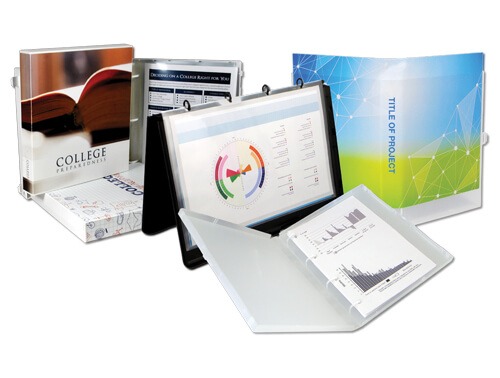
Custom printed business binders are engineered communication tools designed to house your most critical corporate data while projecting a high-end brand image. Unlike the generic options you find at a local office supply store, these are specially manufactured 3-ring binders that feature high-resolution corporate branding, logos, and custom graphics integrated directly into the binder’s construction. They serve a dual purpose: they act as a professional document management system and a mobile brand ambassador for your company.
The role of the Ring binder has evolved significantly in the corporate world. It’s no longer just a place to punch holes and store paper. In 2026, branding trends have shifted decisively toward full-wrap digital printing. While older methods relied on simple screen-printed logos that could flake or peel, modern custom printed business binders utilize 360-degree graphics that cover the front, back, and spine. This creates a cohesive, book-like appearance that commands respect in a boardroom or on a retail shelf. There’s a clear distinction between standard retail binders and industrial-grade custom options; the latter are built to withstand heavy daily use without the seams cracking or the covers warping.
The Core Components of a Professional Binder
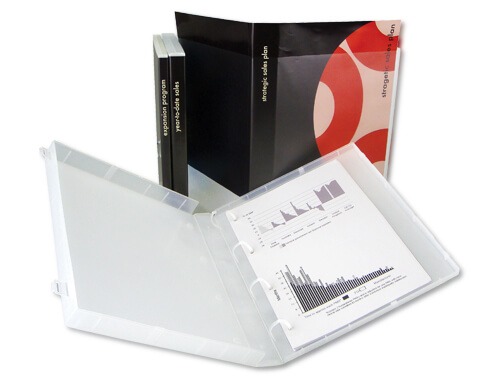
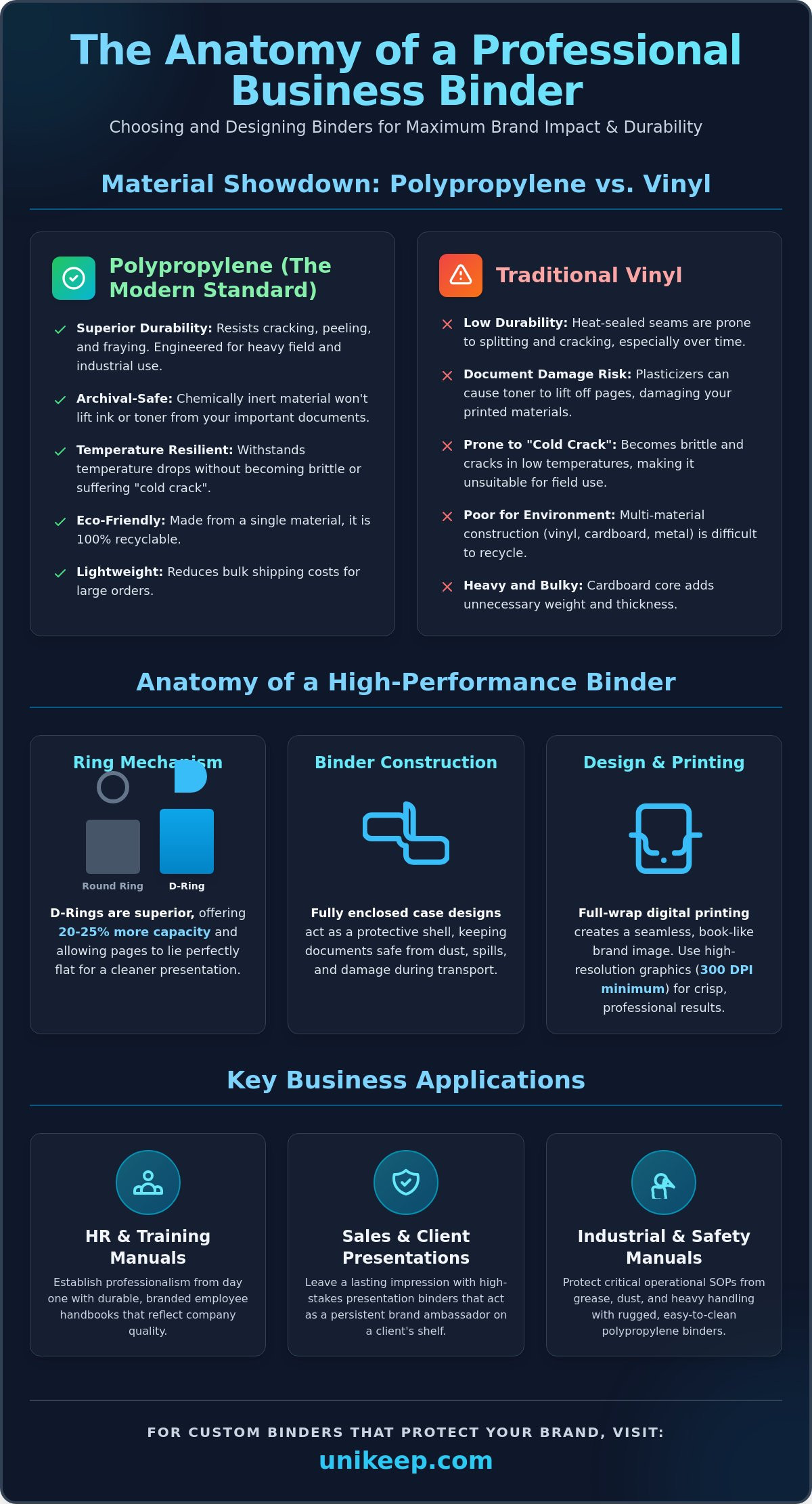
Success starts with the hardware. While round rings are common for light home use, professional applications favor D-rings because they allow pages to lie flat and hold up to 25% more paper. The binder shell is equally vital. We recommend enclosed case designs over open-sided binders to ensure your documents stay clean and secure during transport. Finally, material safety is a top priority. Moving to 100% recyclable polypropylene is now the business standard because it’s archival-safe and won’t lift ink off your printed pages.
Common Business Use Cases
High-quality custom printed business binders are essential for several key operations. They’re the gold standard for employee handbooks and HR training manuals, ensuring new hires feel the weight of your brand’s professionalism from day one. For sales teams, these binders serve as high-stakes client presentations and leave-behinds that stay on a prospect’s desk long after the meeting ends. In industrial settings, they’re used for operational SOPs and safety manuals because the durable construction protects vital information from dust, grease, and heavy handling.
Comparing Materials: Why Polypropylene Outlasts Vinyl for Business
Choosing the right material for your custom printed business binders is a decision that affects your brand’s longevity and your documents’ safety. While many organizations default to vinyl because it’s been the industry standard for decades, modern manufacturing has shifted toward more resilient polymers. The goal is to provide a binder that stays professional under pressure, whether it’s sitting in a climate-controlled office or riding in the back of a service truck. You need a material that offers superior impact resistance and seam strength without the chemical risks associated with older plastics.
Durability isn’t just about how a binder feels in your hand; it’s about how it performs after three years of daily use. Polypropylene, a semi-rigid polymer, is engineered to withstand the rigors of industrial environments. It doesn’t crack, peel, or fray at the edges like multi-material vinyl options. For technical specifications on material longevity and how it protects your assets, check out our guide to archival quality binders.
The Problem with Traditional Vinyl
Vinyl binders often fail due to a phenomenon known as “cold crack.” When temperatures drop, the plastic becomes brittle and the heat-sealed seams begin to split. This is a disaster for field manuals or safety SOPs stored in unheated warehouses. Beyond physical failure, vinyl poses a chemical threat. It contains plasticizers that can migrate into your documents, causing toner to lift off the page and stick to the binder cover. Furthermore, because vinyl binders are typically made of a mix of plastic, cardboard, and metal, they’re incredibly difficult to recycle, often ending up in landfills.
The Polypropylene Advantage
Polypropylene is the superior choice for personalized binders because it’s a single-material construction. It’s 100% recyclable and remarkably lightweight, which helps reduce shipping costs for bulk business orders. Citing research on archival-safe plastics confirms that polypropylene is chemically inert. This means it won’t react with your printed materials, ensuring long-term preservation. The hinges on these binders are virtually indestructible, having been tested for thousands of openings without showing signs of stress. If you want to ensure your corporate records stay pristine, you can browse our full range of durable solutions at UniKeep.
When you invest in custom printed business binders, you’re buying more than just a folder. You’re buying a guarantee that your branding won’t flake off and your pages won’t be ruined by chemical migration. Polypropylene provides a rigid, protective shell that maintains its professional appearance regardless of the environment. It’s a smart, sustainable choice for any business that values both its image and its data integrity.
Designing Your Branded Binder for Maximum Impact
Designing custom printed business binders involves more than just slapping a logo on a cover. To achieve a high-impact branding experience, you should utilize a “Full Wrap” design. This technique covers the front, back, and spine, creating a seamless 360-degree visual. When your binders sit on a shelf, the spine is often the only thing visible. If it’s blank or poorly designed, you’ve lost a branding opportunity. A cohesive wrap makes the binder look like a professionally published book rather than a piece of office stationery.
Technical precision is vital for professional results. You must start with high-resolution assets; 300 DPI is the absolute minimum for print. Anything lower results in pixelation that makes your brand look amateur. Similarly, color matching is non-negotiable. Ensure your corporate hex codes are converted correctly to the printer’s specific color profile. This ensures the vibrant blue in your logo doesn’t turn into a dull navy on the final product. The psychological impact of color and texture shouldn’t be ignored. Darker tones like charcoal or navy project authority and reliability, while bright, high-contrast colors increase visibility for safety manuals in high-traffic areas.
Logo Placement and Typography
The spine is your most valuable real estate. Follow the “Golden Rule” of spine branding by ensuring your logo or title is centered and large enough to be read from several feet away. Don’t fall into the clutter trap. It’s tempting to fill every square inch with information, but balancing your graphics with sufficient white space makes the design feel premium. For industrial and safety applications, font legibility is paramount. Use clean, sans-serif fonts that remain readable even in low-light warehouse conditions.
Advanced Customization Features
Modern custom printed business binders offer features that go beyond static graphics. You can integrate clear overlays, allowing you to swap out cover sheets for specific projects while keeping the permanent branding underneath. Custom interior pockets and business card holders add functional value for sales teams who need to leave a lasting impression. Digital print technology now allows for variable data. This means you can personalize individual binders with employee names or specific department codes during the same production run. This level of detail shows your team and your clients that you value precision in every aspect of your operation.
Navigating the Bulk Custom Ordering Process
Ordering custom printed business binders shouldn’t be a guessing game. It’s a methodical process that ensures your final product matches your corporate standards perfectly. When you’re managing a project for hundreds or thousands of units, precision in the planning stage prevents costly errors during production. You’re not just buying office supplies; you’re coordinating a manufacturing run that represents your brand’s commitment to quality.
The first step is determining your capacity needs. This is a technical calculation based on page count and paper weight. A standard sheet of 20lb bond paper is approximately 0.004 inches thick, but you must also account for the thickness of tab dividers and protective sleeves. Once you have your total stack height, you can select the appropriate ring size. Options typically range from slim 0.5-inch rings for sleek sales leave-behinds to robust 3-inch rings for massive archival projects. After finalizing specs, you’ll submit your artwork and move into the proofing phase. Understanding lead times is also vital, as national delivery for bulk freight requires careful scheduling to meet your internal launch dates.
Calculating the Right Quantity
Smart procurement managers always order a buffer. We recommend ordering at least 10% more than your current headcount or immediate need. This small overhead saves significant money in the long run by avoiding the high setup costs of a small reprint later. It also ensures you have pristine replacements ready for new hires or lost materials. If you have the warehouse space, storing bulk binder inventories in a climate-controlled environment is the most efficient way to manage your supply chain. Bulk pricing tiers are designed to reward volume, so hitting a higher tier often results in a much lower per-unit cost for large organizations.
The Importance of Proofing
Don’t rush the proofing stage. When you review a digital proof, look closely at the bleed lines and safe zones. Bleed lines ensure your graphics extend to the very edge of the binder shell without leaving white borders, while safe zones keep your critical text and logos away from the trim edges. For large-scale corporate rollouts, physical prototypes are an invaluable tool. They allow your team to verify color accuracy and hinge strength in person before the full run begins. Common design mistakes, such as missing fonts or low-resolution files, are the primary causes of production delays. You can browse our custom options to see how our precision manufacturing handles complex corporate designs.
Why UniKeep is the Preferred Choice for Professional Binders
UniKeep has been a leader in the document management industry since 1986, providing reliable solutions for the HR, medical, and manufacturing sectors. We understand that a binder is more than just a storage tool; it’s a critical part of your operational workflow. While many competitors focus on low-cost promotional items that fall apart after a few uses, we prioritize industrial durability. Our custom printed business binders are engineered to be high-performing assets that reflect the quality of your brand. By manufacturing our products right here in the USA, we maintain strict quality control standards that ensure every unit meets your specifications.
Our commitment to sustainability is a core part of our manufacturing process. We utilize 100% recyclable polypropylene, which provides a rigid and protective shell that outlasts traditional materials. This choice supports eco-conscious brands looking to reduce their environmental footprint without compromising on strength. When you choose UniKeep, you’re investing in a product that has a proven track record of surviving the most demanding professional environments.
The Enclosed Case Advantage
The signature feature of a UniKeep binder is the “Snap-Lock” enclosed case design. Unlike standard open-sided binders, our case-style construction creates a 360-degree seal around your documents. This prevents pages from falling out during transit and provides a shield against dust, spills, and environmental damage. For sales teams in the field or technicians in a warehouse, this protection is indispensable. Additionally, the flat, uniform edges make these binders incredibly easy to stack and organize on office shelves or in cabinets, creating a clean and professional appearance.
Seamless Integration with Accessories
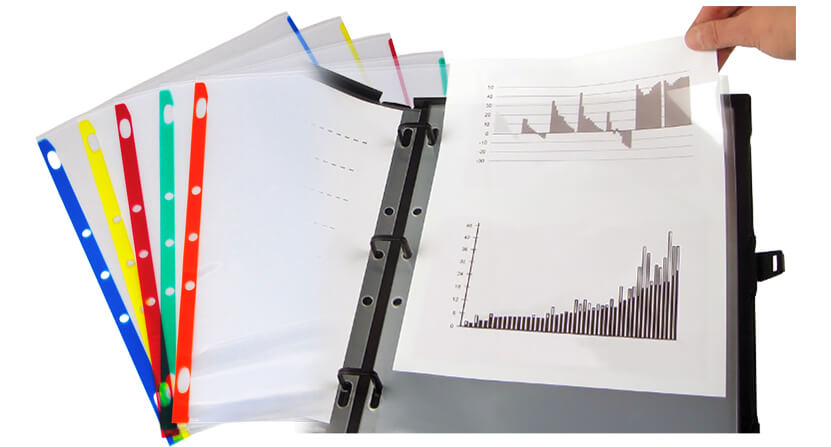
We provide more than just the shell; we offer a complete organizational system. You can easily pair your custom printed business binders with our range of archival-safe sheet protectors and dividers to keep your contents pristine. For specialized applications, we offer integrated media storage like CD/DVD sleeves that fit directly into the ring mechanism. This allows you to create a comprehensive toolkit tailored to your specific industry. Whether you’re building a training manual or a high-stakes client presentation, our accessories ensure every component of your project is secure and professional.
Build Your Brand Authority with Precision Engineering
Your corporate documents deserve a home that reflects the caliber of your work. By prioritizing 100% recyclable polypropylene over fragile vinyl, you ensure your custom printed business binders remain professional and intact for years of heavy use. We’ve explored how a 360-degree full-wrap design and high-resolution printing can transform a simple folder into a powerful brand ambassador. Protecting your data with a Snap-Lock enclosed case isn’t just about organization; it’s about projecting confidence in every client meeting or training session.
Since 1986, we’ve served Fortune 500 companies by delivering industrial-grade solutions that are proudly Made in the USA. We’re ready to help you streamline your bulk ordering process and achieve a flawless corporate rollout. Don’t settle for disorganized materials that undermine your brand’s reputation. It’s time to invest in an organizational system built for longevity, sustainability, and maximum impact. Request a Custom Quote for Your Business Binders Today and take the first step toward a more organized, professional future. Your team and your clients will notice the difference.
Frequently Asked Questions
What is the standard turnaround time for custom printed business binders?
Standard production typically takes 10 to 15 business days once your digital proof is approved. This timeline allows our manufacturing team to ensure high-resolution print quality and precise assembly of your order. If you’re preparing for a specific corporate event or product launch, we recommend starting the design process early to account for shipping logistics to your location.
Can I print on the spine and back cover of the binder?
Yes, our digital printing process allows for a full-wrap design that covers the front, back, and spine. This creates a professional 360-degree brand experience that is essential for shelf visibility and high-stakes presentations. Utilizing custom printed business binders with full-wrap graphics ensures your corporate identity is clear and recognizable from any angle in a boardroom or warehouse.
Are polypropylene binders more expensive than vinyl options?
While the initial unit cost may differ slightly from vinyl, polypropylene offers a much lower total cost of ownership. These binders don’t suffer from “cold crack” or seam failure, meaning you won’t have to replace them nearly as often. They provide a more durable, long-term solution that protects your investment and keeps your branded materials looking pristine for years.
What file formats do I need to provide for my corporate logo?
Vector files such as AI, EPS, or high-resolution PDFs are the preferred formats for professional results. These files allow us to scale your logo to any size without losing clarity or sharpness. If you only have raster images, they must be at least 300 DPI at the final print size to prevent pixelation and ensure your branding looks crisp on the binder shell.
Do you offer low minimum order quantities for small businesses?
We provide flexible ordering options that cater to both large corporations and growing small businesses. While bulk orders unlock the most significant discount tiers, we offer short-run production for teams that need a specific number of binders for a niche project. This accessibility allows businesses of all sizes to maintain a professional image without overextending their inventory budgets.
Are custom binders from UniKeep archival-safe for long-term storage?
Yes, all UniKeep binders are made from 100% polypropylene, which is a chemically inert and archival-safe material. This is a critical feature for custom printed business binders used in medical, legal, or HR departments. Unlike vinyl, which can cause ink to lift off your pages, our material ensures your documents remain in perfect condition for decades of storage.
What ring size do I need for a 200-page training manual?
A 1-inch ring is the standard recommendation for a 200-page manual using 20lb bond paper. If your project includes heavy cardstock dividers or multiple sheet protectors, you might consider a 1.5-inch ring to provide extra breathing room. Choosing the correct size prevents the pages from binding or tearing when the manual is opened and closed frequently during training sessions.
Do custom binders come with interior pockets?
Many of our case-style binders feature built-in interior pockets for quick document storage and business card organization. These pockets are molded directly into the polypropylene shell for maximum durability. If your specific application requires more specialized storage, you can easily integrate binder accessories like CD sleeves or additional adhesive pockets to create a fully customized organizational system.
